Monk Mode: What It Is, the Rules, and a Kinder 30-Day Version
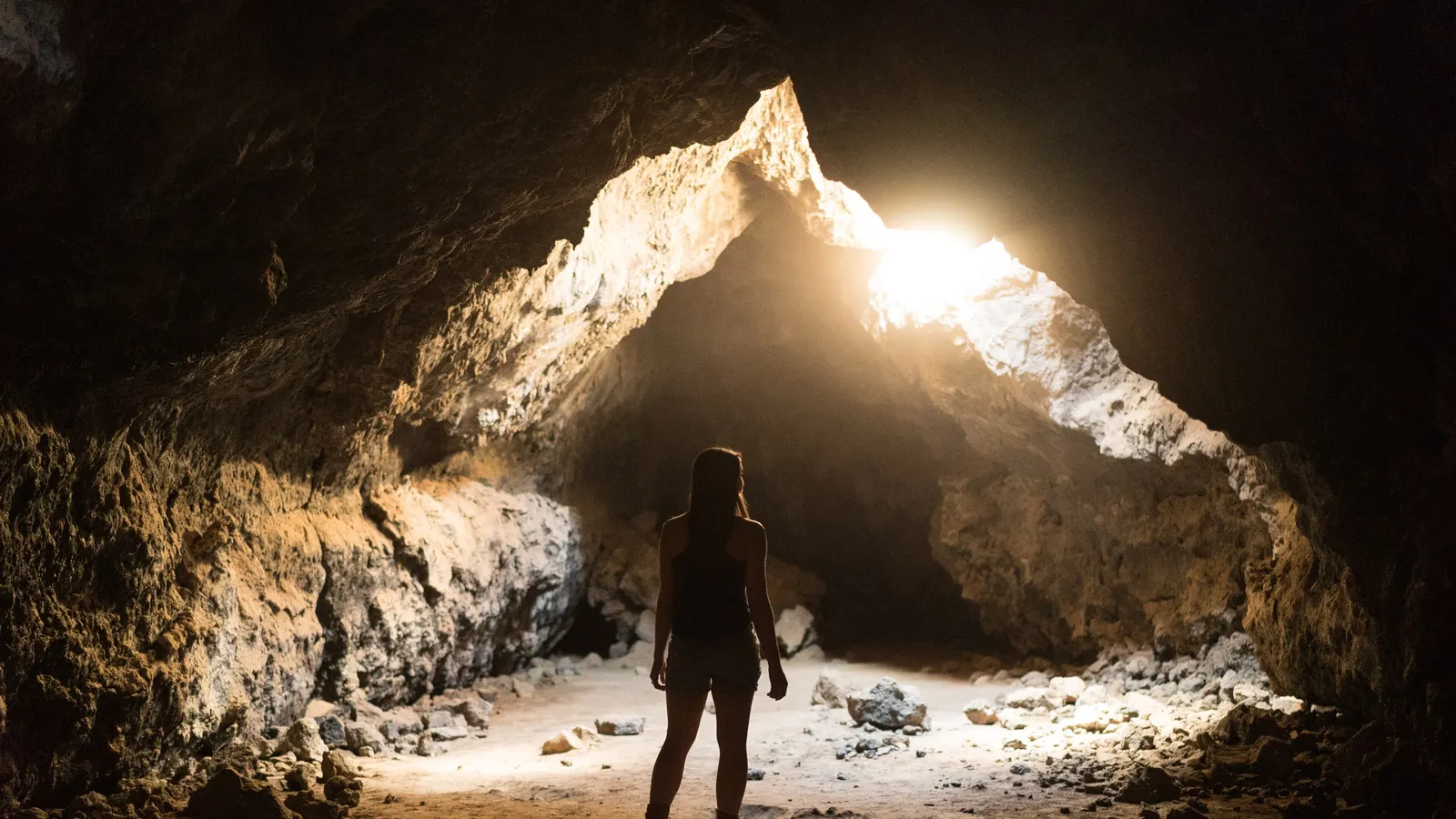
On TikTok and YouTube, "monk mode" usually looks like this: a dark room, a desk, a gym bag, a phone in a drawer, and a promise to disappear for 90 days and come back a new person.
There is something real in it. Most of us are drowning in distraction, and a season of focus can change a life. But there is also a trap: confusing discipline with isolation. This guide gives you both sides, and a version that keeps the good and leaves the harm.
What is monk mode?
Monk mode is a self-imposed period, usually 30 to 90 days, when you remove distractions and pleasures that pull you away from your goals, so that you can focus on one or two things that matter. The name borrows the image of a monk's simple, disciplined life. It is an internet idea, not a religious practice, and it has no official rulebook.
People use it to:
- get fit or lose weight,
- study for an exam,
- build a business or a creative project,
- recover from a breakup or a bad habit,
- simply reset a life that feels scattered.
The usual monk mode rules
Online lists vary, but these come up again and again:
- A fixed wake-up time.
- Exercise every day.
- Deep work on one main goal, for hours, without interruption.
- No or very limited social media.
- No alcohol, no junk food, often no gaming or porn.
- Reading every day.
- Early nights.
- Limited socialising.
Most of these are sensible. One of them is risky. We will come back to number 8.
What the research says about the good parts
There is no study of "monk mode" itself. There is good research on the pieces.
- Your phone costs you even when you do not touch it. In experiments, people whose phones were in another room did better on tests of available mental capacity than people whose phones were on the desk, even face down and silent (Ward et al., 2017).
- Interruptions add stress. When people were interrupted while working, they compensated by working faster, but reported more stress, frustration and time pressure (Mark, Gudith & Klocke, 2008).
- Less social media can mean less loneliness. Students who limited social media to about 30 minutes a day for three weeks reported less loneliness and depression than a control group (Hunt et al., 2018).
- Habits take time. A new daily behaviour took a median of 66 days to become automatic in a real-world study (Lally et al., 2010). That is why 60 to 90 day monk modes appeal to people. Thirty days is a strong start.
The part to be careful with: isolation
Real monks are rarely alone. Most live in communities, eat together, work together and support each other. The internet version often forgets that.
A large meta-analysis of 148 studies found that people with stronger social relationships had about a 50% higher likelihood of survival over the study periods than people with weaker ones (Holt-Lunstad, Smith & Layton, 2010). Cutting out scrolling is healthy. Cutting out people is not.
If monk mode starts to feel like hiding, if you feel low, numb or alone for weeks, that is not discipline. Please talk to someone. If you are struggling or in danger, see our crisis help page or find a free helpline at findahelpline.com.
Monk mode works better in a monastery than in a cave. If you want discipline with people beside you: request to join.
A kinder 30-day monk mode plan
Before you start: one page
- My one goal: (for example, "finish the first draft", "run 5 km", "save US$500").
- What I am removing: the two or three distractions that steal the most time.
- What I am keeping: sleep, real meals, and at least two people I talk to every week.
- My daily non-negotiables: three or four, no more.
The daily rhythm
- Morning: same wake-up time, daylight, movement for 20 to 30 minutes.
- Deep work block: 60 to 120 minutes on your one goal, phone in another room.
- Afternoon: normal life, work, chores.
- Evening: 20 to 30 minutes of reading, a short note in a journal, screens off an hour before bed.
- Weekly: one long walk, one real conversation with a friend, one easy day.
The four phases
| Days | Focus |
|---|---|
| 1-7 | Remove the distractions. Set the wake-up time. Expect cravings for the phone. |
| 8-14 | Lengthen the deep work block. Keep the exercise easy and regular. |
| 15-21 | The dip: boredom shows up. Keep the minimum, do not add new rules. |
| 22-30 | Notice what changed. Decide which three rules you will keep for good. |
For a ready-made day-by-day plan, try the 30-day discipline challenge or build your own with the 30-day challenge generator.
Monk hours: for people with jobs and families
You do not need to vanish for 90 days. You can practise monk hours:
- one or two protected blocks a day with the phone in another room,
- one screen-free evening a week,
- one "monk morning" at the weekend for your main project.
Small and steady beats dramatic and brief.
Monk mode vs dopamine detox vs 75 Hard
- Monk mode: a season of focus on one goal, with distractions removed.
- Dopamine detox: a short break from overstimulating habits (the name is not literal science).
- 75 Hard: a strict 75-day checklist with a restart-from-day-one rule.
All three can work if they serve a goal you care about. None of them needs to be punishing.
A task for tonight
Write one sentence: "For the next 30 days, my one goal is..." Then name the single distraction you will remove tomorrow, and the one person you will still call every week. That is monk mode, done well.
If you would like daily tasks, honest check-ins and a tribe that values focus and people: request to join.
Walking beside you,
The Chief
Sources
- Ward, A. F., Duke, K., Gneezy, A., & Bos, M. W. (2017). Brain drain: The mere presence of one's own smartphone reduces available cognitive capacity. Journal of the Association for Consumer Research, 2(2), 140-154. doi.org/10.1086/691462
- Mark, G., Gudith, D., & Klocke, U. (2008). The cost of interrupted work: More speed and stress. Proceedings of the SIGCHI Conference on Human Factors in Computing Systems, 107-110. doi.org/10.1145/1357054.1357072
- Hunt, M. G., Marx, R., Lipson, C., & Young, J. (2018). No more FOMO: Limiting social media decreases loneliness and depression. Journal of Social and Clinical Psychology, 37(10), 751-768. doi.org/10.1521/jscp.2018.37.10.751
- Lally, P., van Jaarsveld, C. H. M., Potts, H. W. W., & Wardle, J. (2010). How are habits formed: Modelling habit formation in the real world. European Journal of Social Psychology, 40(6), 998-1009. doi.org/10.1002/ejsp.674
- Holt-Lunstad, J., Smith, T. B., & Layton, J. B. (2010). Social relationships and mortality risk: A meta-analytic review. PLoS Medicine, 7(7), e1000316. doi.org/10.1371/journal.pmed.1000316
Related reading: How to be more disciplined · Dopamine detox · 75 Hard challenge
Questions
What does monk mode mean?
Monk mode is an internet term for a set period, often 30 to 90 days, when you cut distractions such as social media, alcohol, gaming and late nights to focus on one or two goals, like fitness, study or a business. It borrows the image of a monk's simple, disciplined life. It is not a religious practice.
What are the rules of monk mode?
There are no official rules. Common ones are: a fixed wake-up time, daily exercise, deep work on one main goal, limited social media and phone use, no alcohol or junk food, and early nights. Choose the few that serve your goal.
How long should monk mode last?
Thirty days is a good first try. It is long enough to change routines and short enough to keep. Some people do 60 or 90 days. Research suggests new habits often take around two months to feel automatic.
Is monk mode healthy?
The focus part can be healthy. Cutting yourself off from people is not: research links social isolation and loneliness with worse health. A healthy monk mode removes distractions, not relationships, and keeps sleep, food and rest in balance.
Can I do monk mode with a job and a family?
Yes. Use 'monk hours' instead of a monk month: protect one or two distraction-free blocks a day and one screen-free evening a week, while keeping time for the people you live with.
General information for wellbeing, not medical, psychological or financial advice. If you are struggling, see crisis help.