
Journal · Discipline and habits
How to Stop Procrastinating: It's Not About Time, It's About Feelings
The task is not difficult. You know exactly what to do. It would take, honestly, forty minutes. And yet here you are, having reorganised your desk, answered unimportant messages, watched a video about how bridges are built, and now, reading an article about procrastination.
Welcome. Sit down. Let us be honest with each other.
Procrastination is a mood problem wearing a time costume
We usually treat procrastination as poor time management, so we buy planners and download apps. Then we procrastinate on using them.
Researchers Fuschia Sirois and Timothy Pychyl offer a more accurate explanation: procrastination is largely about short-term mood repair. When a task makes us feel anxious, bored, inadequate or overwhelmed, avoiding it gives instant relief. We trade our future self's peace for our present self's comfort (Sirois & Pychyl, 2013).
This is why procrastination can feel so irrational. It is not a thinking problem. It is a feeling problem, and the feeling wins in the moment.
It is also extremely common. A large review by Piers Steel estimated that the majority of students procrastinate and that around 15-20% of adults may do so chronically (Steel, 2007). And it is not harmless: in a longitudinal study, procrastination was linked with higher stress and poorer health behaviours over time (Sirois, Stride & Pychyl, 2023).
So if you procrastinate, you are not uniquely weak. You are a human being whose brain is doing something very human. The question is how to work with it.
Nine ways to stop procrastinating
1. Name the feeling
Before anything else, ask: What feeling am I avoiding? Is the task boring? Is it frightening because it will be judged? Is it vague, so you do not know where to start? Naming the feeling turns a fog into a problem you can solve. Boredom needs a reward. Fear needs a smaller first step. Vagueness needs a clearer one.
2. Shrink the first step to almost nothing
"Write the report" is a mountain. "Open the document and write the title" is a pebble. Your brain resists mountains; it barely notices pebbles. Choose a first step so small that refusing it would feel silly.
3. Use the five-minute door
Tell yourself you will work on it for five minutes only, and that you are genuinely allowed to stop after that. Often you will keep going, because the hardest part of most tasks is the doorway, not the room. If you stop at five minutes, you have still done five minutes more than yesterday.
4. Remove the escape routes
Procrastination needs somewhere to go. Close the browser tabs. Put the phone in another room. Use full-screen mode. You are not relying on willpower; you are removing the exits so the easiest path is the task itself.
If you're searching, we may be what you're looking for: request to join.
5. Decide when and where, exactly
"I'll do it tomorrow" is a wish. "Tomorrow at 9:00, at the kitchen table, I will write the first paragraph" is a plan. Specific if-then plans make action far more likely (Gollwitzer & Sheeran, 2006).
6. Make the future self real
Procrastination treats your future self like a stranger who will somehow handle it. Close your eyes and picture tomorrow evening's version of you, the one who either did the work or did not. Which one would you rather hand the day to? Then do one small thing for them.
7. Forgive yesterday
This sounds soft. It is practical. In one study, students who forgave themselves for procrastinating before their first exam procrastinated less before the second (Wohl, Pychyl & Bennett, 2010). Shame makes the task feel even worse, which makes avoidance more tempting. Self-forgiveness lowers the emotional cost of starting again.
8. Pair the dreaded with the pleasant
Do the dull filing while listening to music you love. Make the difficult phone call from a park bench in the sun. Pairing an unpleasant task with something you enjoy softens the mood that drives avoidance.
9. Work alongside someone
There is a reason people get so much done in libraries and co-working spaces. Being in the presence of others who are working, even silently, makes starting easier. Arrange a "work together" hour with a friend, on a call or in person. Say what you will do at the start and report at the end.
A five-step rescue for any stuck task
When you are stuck right now, run this short sequence:
- Write the task down in one plain sentence.
- Name the feeling in one word: bored, scared, confused, overwhelmed.
- Answer the feeling. Bored: add music or a reward. Scared: lower the stakes ("this is a rough draft"). Confused: write the very first question you need answered. Overwhelmed: cut it into three smaller pieces.
- Clear the exits. Phone away, tabs closed, door shut if you can.
- Start the timer for five minutes and begin the smallest piece.
It takes under two minutes to run, and it turns a vague dread into a concrete next step. Keep it written on a card near your desk until you know it by heart.
When procrastination is a signal
Sometimes we delay because the task is wrong for us: a job that no longer fits, a project we never really agreed to, a goal we inherited from someone else. If you are procrastinating on almost everything in one area of life, that may be worth listening to. It could be a sign to rethink the direction, not to push harder.
And if procrastination comes with persistent low mood, hopelessness or exhaustion that does not lift, it may be worth speaking to a doctor. Sometimes what looks like a habit is a health matter, and there is no shame in getting support.
Your task for the next hour
Pick the one task you have been avoiding longest. Write down the feeling it gives you in one word. Then write the smallest possible first step. Set a timer for five minutes, put your phone in another room, and do only that step. When the timer ends, you may stop, honestly. Tick it off either way.
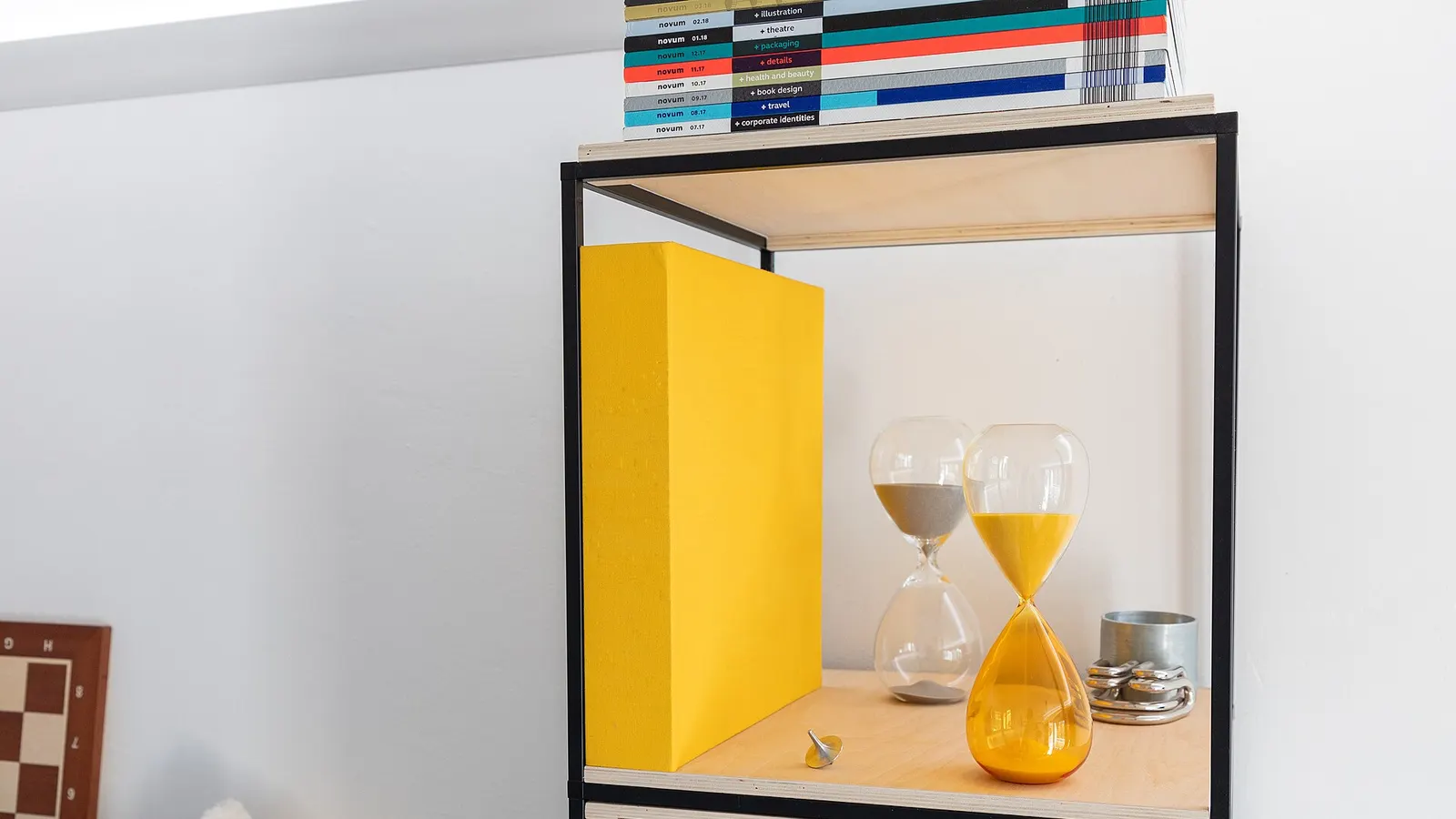
You do not need to become a different person to beat procrastination. You need to make starting feel smaller than avoiding. Do that often enough and, slowly, the hourglass turns in your favour.
If you're searching, we may be what you're looking for: request to join.
Starting with you,
The Chief
Sources
- Sirois, F., & Pychyl, T. (2013). Procrastination and the priority of short-term mood regulation: consequences for future self. Social and Personality Psychology Compass, 7(2), 115-127. doi.org/10.1111/spc3.12011
- Steel, P. (2007). The nature of procrastination: a meta-analytic and theoretical review of quintessential self-regulatory failure. Psychological Bulletin, 133(1), 65-94. doi.org/10.1037/0033-2909.133.1.65
- Sirois, F. M., Stride, C. B., & Pychyl, T. A. (2023). Procrastination and health: a longitudinal test of the roles of stress and health behaviours. British Journal of Health Psychology, 28(3), 860-875. doi.org/10.1111/bjhp.12658
- Gollwitzer, P. M., & Sheeran, P. (2006). Implementation intentions and goal achievement: a meta-analysis of effects and processes. Advances in Experimental Social Psychology, 38, 69-119. doi.org/10.1016/S0065-2601(06)38002-1
- Wohl, M. J. A., Pychyl, T. A., & Bennett, S. H. (2010). I forgive myself, now I can study: how self-forgiveness for procrastinating can reduce future procrastination. Personality and Individual Differences, 48(7), 803-808. doi.org/10.1016/j.paid.2010.01.029
Related reading: How to be more disciplined · How long does it take to form a habit? · What to do when you feel lost in life
Questions
Why do I procrastinate even on things I care about?
Often because the task stirs up an uncomfortable feeling: boredom, fear of failure, self-doubt or overwhelm. Delaying gives short-term relief from that feeling, even though it costs you later. Caring about something can make the feeling stronger, not weaker.
Is procrastination a sign of laziness?
Not usually. Researchers describe procrastination largely as a problem of managing emotions rather than managing time. Many procrastinators are busy; they are just busy with easier things.
What is the fastest way to stop procrastinating right now?
Choose the smallest possible first action and do only that for five minutes, with distractions out of reach. Starting is the hardest part; once you begin, continuing is usually easier.
Does forgiving yourself really help?
One study of university students found that those who forgave themselves for procrastinating before a first exam procrastinated less before the next one. Harsh self-blame tends to keep the cycle going.
General information for wellbeing, not medical, psychological or financial advice. If you are struggling, see crisis help.